

5 Easy-to-Spot Signs Your Concrete Walkway Might Be a Trip Hazard (And How to Fix It)
What every homeowner should know about trip hazards on their walkway
More than a simple path, your walkway welcomes guests and defines your entryway. It’s where your kids race each other before school. It’s where guests get their first impression of your home. It’s even where you’ve probably dropped your grocery bags more times than you’d like to admit.
So when that walkway starts shifting, cracking, or looking a little rough, it doesn’t take long for it to go from helpful to hazardous.
And if you live in Grand Rapids, you already know how unforgiving our winters can be. Freeze-thaw cycles, moisture, and tree roots love to team up and wreak havoc on concrete. Even a small bump can leave someone stumbling.
The bright side? You can usually spot problems early—and the fixes aren’t as complicated as you might think. Let’s walk through five common signs your concrete walkway might be a trip hazard and what you can do to fix it.
1. Uneven or Raised Slabs
Ever catch your foot on a slab that’s just a bit higher than the next one? That little lip might seem harmless—but it’s a classic trip hazard.
Why it happens: Soil settles over time, roots push upward, and Michigan’s freeze-thaw cycles can nudge concrete slabs out of place.
Notice the change: Walk across your walkway and pay attention to how your feet land. If one section feels higher or lower than the next, even by just a little, it can create a tripping hazard.
Address the problem: Small uneven spots might be smoothed out with grinding, but larger shifts usually require professional leveling or slab repair to ensure the surface is safe and stable.
2. Cracks & Fractures in the Concrete
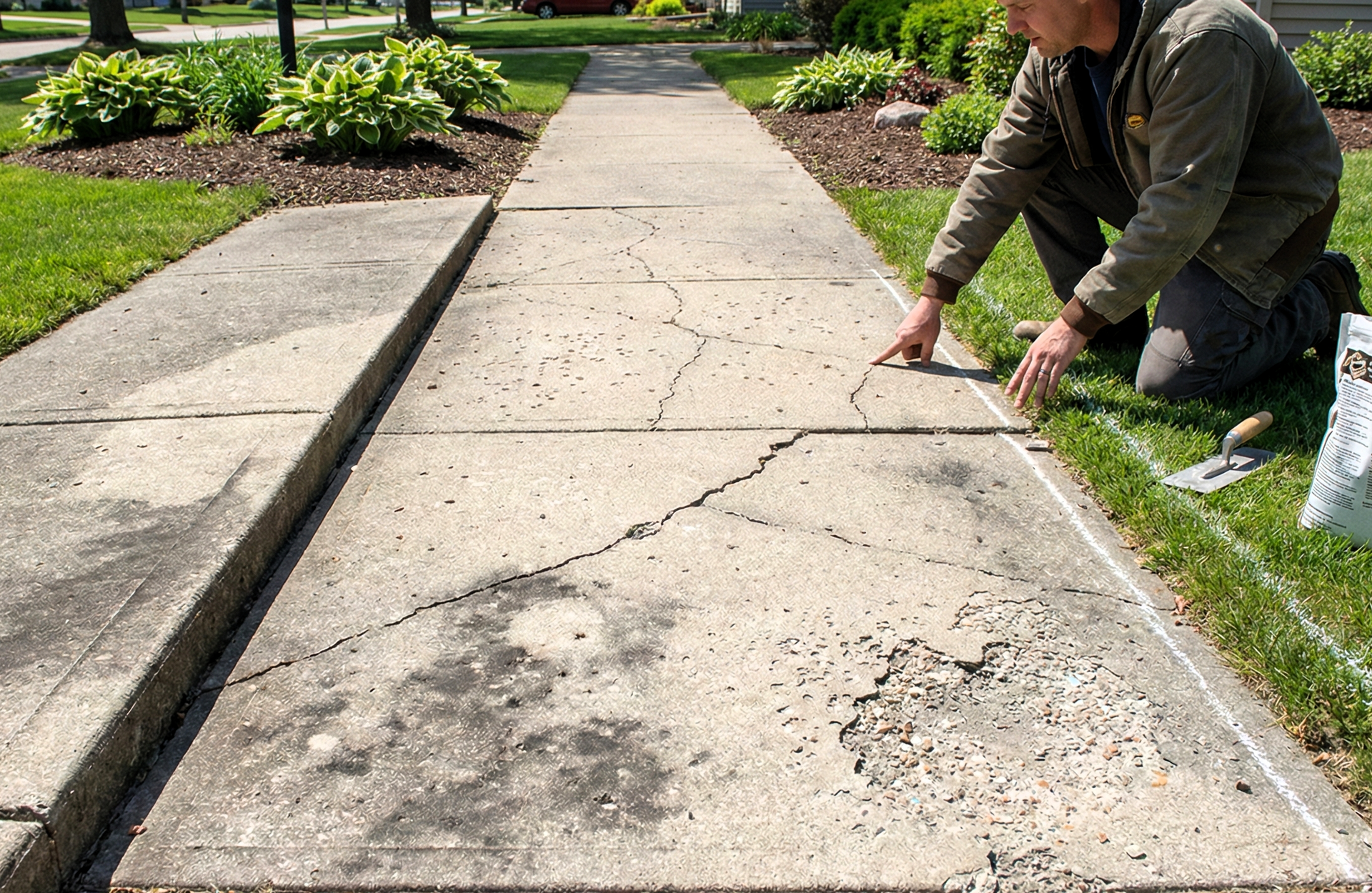
Cracks are more than just an eyesore—they’re the start of hidden dangers. Small cracks can expand over time, creating gaps that catch shoes or stroller wheels.
Causes: Age, weather, heavy foot traffic, or a shaky base.
Notice the Details: Keep an eye out for fine, hairline cracks as well as deeper splits in the concrete. Areas where pieces are chipped away or where joints are starting to pull apart are signs that the damage may be more than superficial.
Taking Action: Small cracks can usually be filled and sealed to prevent moisture from causing more problems. For larger breaks or missing chunks, though, it’s often best to replace the affected section to ensure the surface stays safe and stable.
3. Loose or Broken Edges
Have you noticed crumbling edges along your walkway? Those jagged spots are not only unsafe—they make your walkway look worn and neglected.
Why it matters: Crumbling or uneven edges aren’t just an eyesore—they can catch your shoes, create tripping hazards for kids and pets, and make getting around your garage or driveway more frustrating than it should be.
What to do about it: Repairing the damaged edge or replacing the affected section usually solves the problem. For longer-lasting results, consider adding a reinforced border to help keep the concrete intact and prevent the edges from breaking down again.
4. Pooling Water or Poor Drainage
Standing water might seem harmless, but it’s a warning sign. Water that doesn’t drain can weaken the soil beneath your walkway, leading to sinking slabs or slippery surfaces.
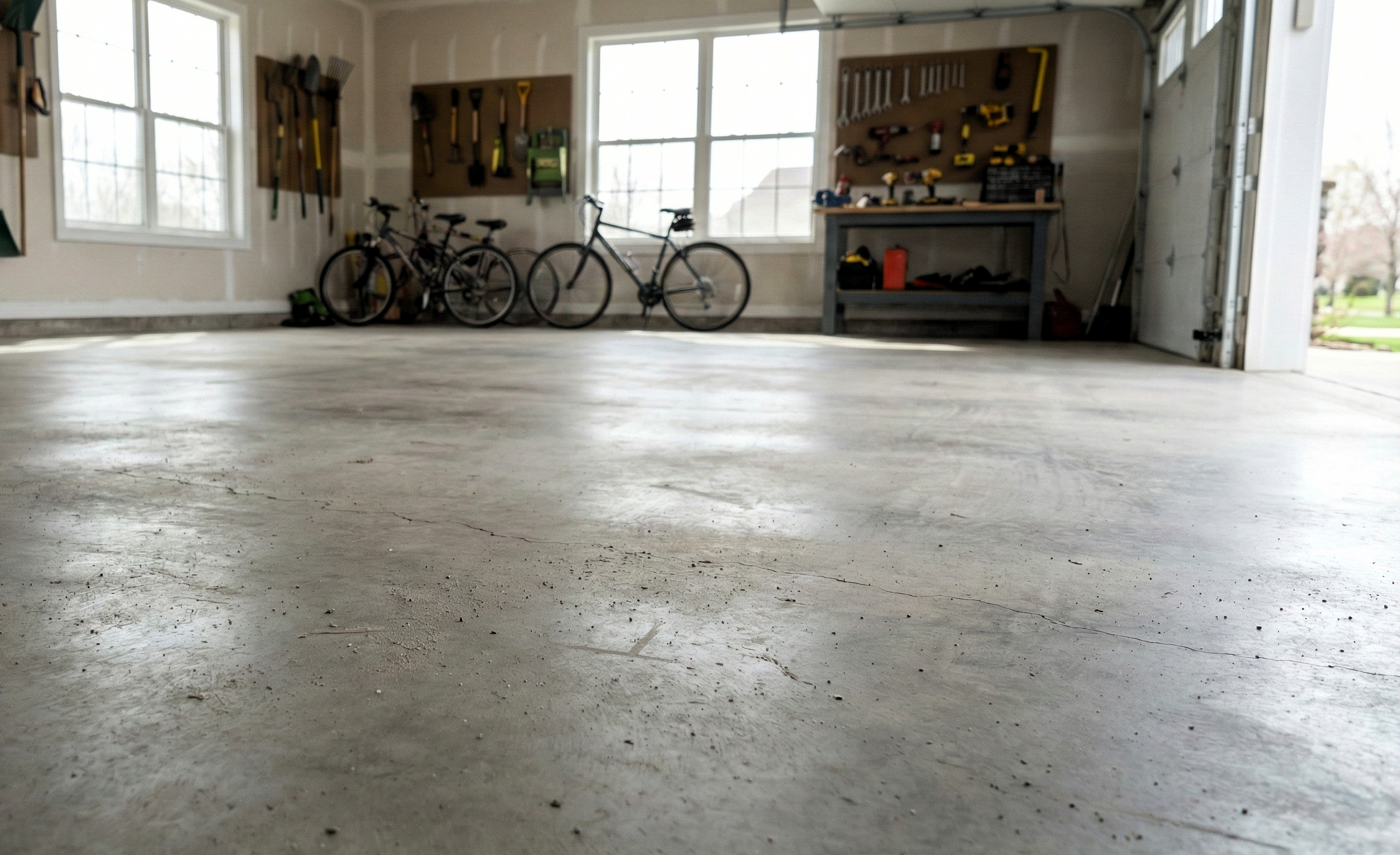
Watch for trouble: Keep an eye on your garage floor after rain or melting snow. If you notice water pooling in certain spots or flowing toward your house, it’s a sign that the slab isn’t draining properly.
What to do: Redirect water away from your garage with better grading, improve drainage around the foundation, and consider professional slab leveling if low spots persist. Tackling these issues early can prevent bigger problems later.
5. Tree Roots or Uplift/Heaving Areas
Trees give our yards charm—but their roots can push up concrete and create ridges you could easily trip on. Soil heaving from freeze-thaw cycles makes it even trickier.
Signs to watch for: Check for sections of your concrete that are rising, tilting, or have gaps underneath. Nearby tree roots pushing up through the surface are a clear warning that the slab is under stress.
What to do about it: Addressing this usually involves controlling the roots and having a professional evaluate the slab. Solutions like lifting, leveling, or selective replacement can bring the concrete back to a safe, even surface.
Take Care of Small Problems Before They Grow
Most walkway issues start small but grow quickly if ignored. Fixing them early keeps your home safe, lowers repair costs and gives you peace of mind.
If you’re noticing any of these signs, Grand Rapids Concrete Pros can help. We understand Michigan weather and know exactly how to repair concrete so it lasts.
Ready to make your walkway safe again? Get your free consultation today and stop small problems before they turn into big ones.
Contact us now!
You might also like
Grand Rapids Concrete Pros Blog