

Why Are My Concrete Steps Spalling? (And How to Prevent Winter Damage)
How winter weather triggers concrete spalling—and simple ways to stop it
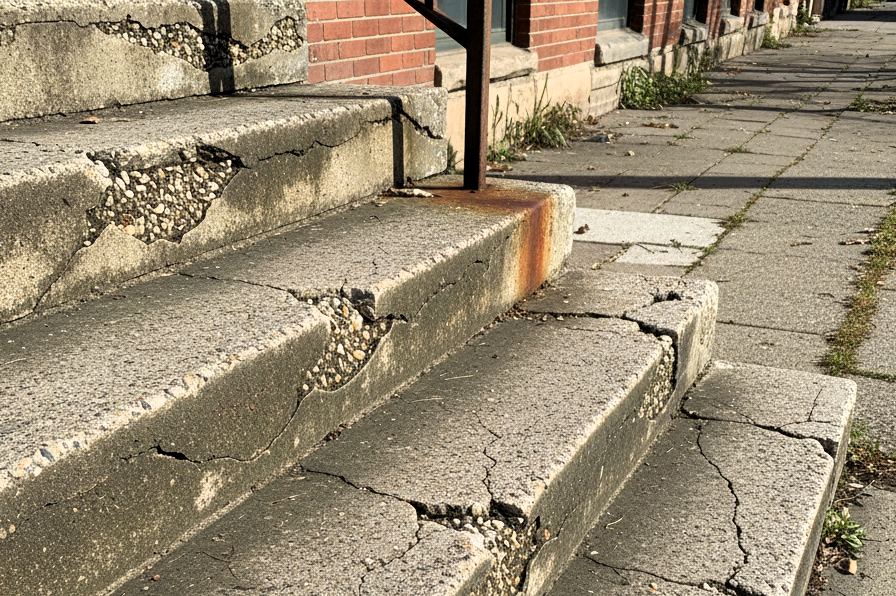
You step outside one chilly Grand Rapids morning, coffee in hand, and notice something odd. The edges of your concrete steps look rougher than usual. There are little flakes scattered around—almost like the surface is peeling. You bend down for a closer look and think, Did my steps just... crumble?
It’s a common sight for homeowners around here. Our winters are long, wet, and brutally cold. Between the snow, salt, and constant freezing and thawing, your concrete steps take a beating every single year. What you’re seeing is called spalling, and while it looks bad, there’s good news: you can prevent it from getting worse—and even stop it from happening again.
Let’s dig into what’s really happening under that crumbling surface, why it’s so common here in Michigan, and how to keep your steps looking solid for many winters to come.
What Exactly Is Concrete Spalling?
Spalling is when the top layer of concrete starts to chip, flake, or peel away. You’ll usually spot it along the edges or flat surfaces that take the most wear—like your front steps or porch. At first, it might seem like a small cosmetic issue, but left alone, it can quickly turn into a safety hazard.
Concrete might look tough, but it’s actually a bit like your skin—it’s full of tiny pores that let moisture in. Once that moisture freezes and expands, it pushes small pieces of concrete out from the surface. Those flakes you’re sweeping up? That’s your first warning that your steps are under stress.
Why Do Concrete Steps Spall So Easily in Michigan?
There’s no single cause, but our Grand Rapids winters make for the perfect storm.
The Freeze–Thaw Cycle
We live in a place where it can be 40° and raining one day, and 10° and snowing the next. That constant freezing and thawing is brutal on concrete. Water seeps into the tiny pores, freezes, expands, and then thaws again—over and over for months. Each time, the surface weakens a little more until it starts breaking apart.
Salt and De-Icers
Most of us toss down salt to keep steps safe and ice-free. The problem is, that same salt can eat away at the concrete surface. It pulls in more moisture, reacts chemically with the concrete, and accelerates spalling. If you’ve ever noticed the worst flaking near where you usually spread salt, that’s why.
Poor Concrete Mix or Installation
Sometimes, the problem started years ago. Maybe the original concrete wasn’t mixed or cured correctly, or the installer skipped air-entrainment (a step that helps the concrete handle freezing pressure). That means your steps were never fully prepared for Michigan winters to begin with.
Hidden Moisture and Rusting Reinforcement
If your steps have steel rebar or wire inside, salt and water can reach it through cracks. When steel rusts, it expands, pushing outward on the surrounding concrete. That internal pressure can lead to cracks and surface damage that you eventually see as spalling.
Drainage Issues
Ever notice puddles forming on your steps after a melt? Standing water is the enemy. It seeps in, freezes overnight, and forces the surface to pop apart. Even the best concrete can’t stand up to repeated cycles like that.
How to Stop Spalling and Protect Your Steps
The key to keeping your steps solid year after year is prevention. You don’t need fancy tools—just some good habits and a little seasonal care.
Before Winter
Give your steps a clean slate. Sweep off dirt, leaves, and last year’s salt residue. Patch any small cracks before the temperatures drop—those are moisture magnets.
Then, seal the surface. A good concrete sealer acts like a raincoat, blocking water from getting inside in the first place. Choose one made for exterior concrete that penetrates the surface rather than sitting on top. And while you’re at it, make sure the steps drain properly—if water pools anywhere, that’s a red flag.
During Winter
Snow removal is your best defense. Shovel early and often so melting snow doesn’t have time to soak in and refreeze. Skip the rock salt if you can. Look for de-icers labeled “concrete safe” or “pet-friendly”—they’re much gentler. And be careful with metal-edged shovels; they can scrape away the protective surface.
After Winter
When spring finally shows up, give your steps a good rinse to remove salt buildup. Inspect for chips or rough spots and address them right away. Even small concrete repairs can go a long way toward preventing bigger problems. Reseal your steps every couple of years for ongoing protection.
When It’s Time to Call a Professional
Sometimes, spalling gets past the point of DIY fixes. If chunks are missing, the surface feels hollow, or you see exposed steel, it’s time to bring in an expert. A professional can assess whether the steps can be resurfaced or if they need replacement entirely.
Here in Grand Rapids, Grand Rapids Concrete Pros knows exactly what Michigan winters do to concrete—and how to build or repair it so it actually lasts. Whether it’s a simple surface repair or a full replacement, they’ll make sure your steps are safe, sturdy, and ready for many more winters.
Keep Your Steps Strong and Safe
Spalling might start small, but it doesn’t stay that way for long. The good news is that most of the damage can be prevented with a bit of care and attention. Clean, seal, and protect—those three steps can save you from a costly replacement later.
And if your concrete is already showing signs of trouble, don’t wait for another winter to make it worse.
Call Grand Rapids Concrete Pros today to schedule an inspection or repair. They’ll help you find the right fix so you can stop worrying about crumbling steps and start enjoying a safe, solid entryway again.
You might also like
Grand Rapids Concrete Pros Blog